What Makes UNS S32760 Unique?
UNS S32760 bolt are a super duplex stainless steel characterized by its 25% chromium, 7% nickel, and 4% molybdenum microstructure. What sets it apart from other duplex grades is the deliberate addition of tungsten and copper.
These elements significantly boost the alloy’s Pitting Resistance Equivalent Number (PREN) to >40, ensuring that S32760 fasteners remain immune to pitting and crevice corrosion even in warm seawater.
Key Specifications: F55 and 1.4501 CNC machining parts
When sourcing these fasteners, you will likely encounter several equivalent designations:
- ASTM A182 F55 screw : The most common forging specification used for high-pressure flanges and heavy-duty F55 bolts.
- EN 1.4501 screw : The European equivalent standard, frequently required for offshore projects in the North Sea.
- NORSOK M-630 (MDS D57): A critical quality standard for the oil and gas industry that ensures the material meets strict toughness and corrosion requirements.
Why Use S32760 Bolts?
Choosing Super Duplex S32760 hex bolt for your bolting requirements offers three primary advantages:
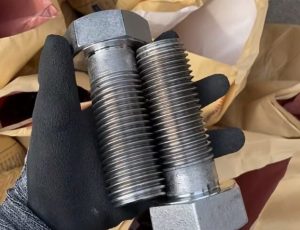
- Superior Corrosion Resistance: These bolts excel in chloride-rich environments, making them the top choice for seawater desalination, marine hardware, and chemical processing plants.
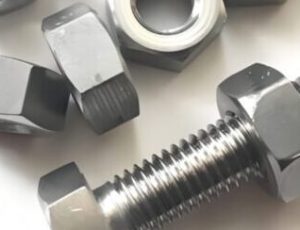
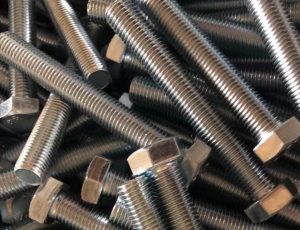
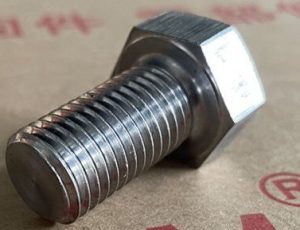
- High Tensile Strength: S32760 hex head bolt offers significantly higher yield strength than 300-series stainless steels, allowing for smaller, lighter fastener designs without sacrificing safety.
- Resistance to SCC: They are highly resistant to Stress Corrosion Cracking (SCC), a common failure mode in oil and gas “sour” service applications.
Common Applications
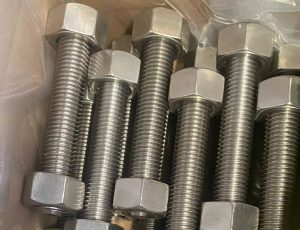
Due to their durability, S32760 fasteners are widely used in:
- Offshore Oil & Gas: Subsea equipment, piping systems, and structural bolting.
- Desalination Plants: High-pressure pumps and RO (Reverse Osmosis) units.
- Flue Gas Desulfurization (FGD): Handling aggressive acidic scrubbers.
- Chemical Processing: Storage tanks and heat exchangers.
Engineering Superiority: A Technical Deep Dive into UNS S32760 for High-Strength Fasteners
In the high-stakes world of offshore engineering and chemical processing, material failure is not an option. For manufacturers of offshore platform fasteners, the transition from standard duplex to UNS S32760 marks the boundary between standard performance and extreme-service reliability. Known frequently by its trade name Zeron 100, this super duplex grade offers a unique metallurgical profile that outclasses traditional stainless steels.
The Chemical Blueprint: X2CrNiMoCuWN25-7-4
The exceptional nature of EN 1.4501 hex head bolt (also documented as W.Nr. 1.4501 hex cap screw) lies in its complex chemistry. Often described by the string X2CrNiMoCuWN25-7-4, its formula includes 25% Chromium, 7% Nickel, and 4% Molybdenum.
Unlike a standard 1.4410 bolt or SAF 2507 bolt equivalent, the S32760 specification mandates intentional additions of Tungsten (W) and Copper (Cu). This specific “cocktail” of elements ensures that the material achieves a PREN 40+ (Pitting Resistance Equivalent Number), providing a robust shield against localized chloride attacks.
Mechanical Integrity: Beyond Standard Yield Strengths
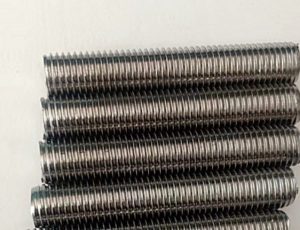
For the fastener industry, the mechanical properties of S32760 round bar are a game-changer. The dual-phase microstructure—consisting of approximately 50% austenite and 50% ferrite—results in a yield strength nearly double that of 300-series stainless steels.
- Tensile Strength: 750–1000 MPa
- Yield Strength (0.2% Offset): ≥ 550 MPa
- Impact Toughness: Excellent ductility even at sub-zero temperatures, making it ideal for Arctic offshore environments.
This high strength-to-weight ratio allows engineers to specify smaller S32760 fasteners without compromising the structural integrity of F55 flanges and fittings, leading to significant weight savings on floating platforms.